Monday, 27 January 2020

Hector's Dolphins, Akaroa, South Island, New Zealand


Our last day in New Zealand and it was a cracker, loads of Hector's dolphins, white-flippered penguins, New Zealand fur seals, amazing sting rays and 4 species of shearwater, including Bullers which was new for me. Hector's dolphins are the smallest and one of the rarest with a very unusual 'Mickey Mouse ear' shaped dorsel fin.

Sunday, 12 January 2020

Whale watching Kaikoura, South Island New Zealand

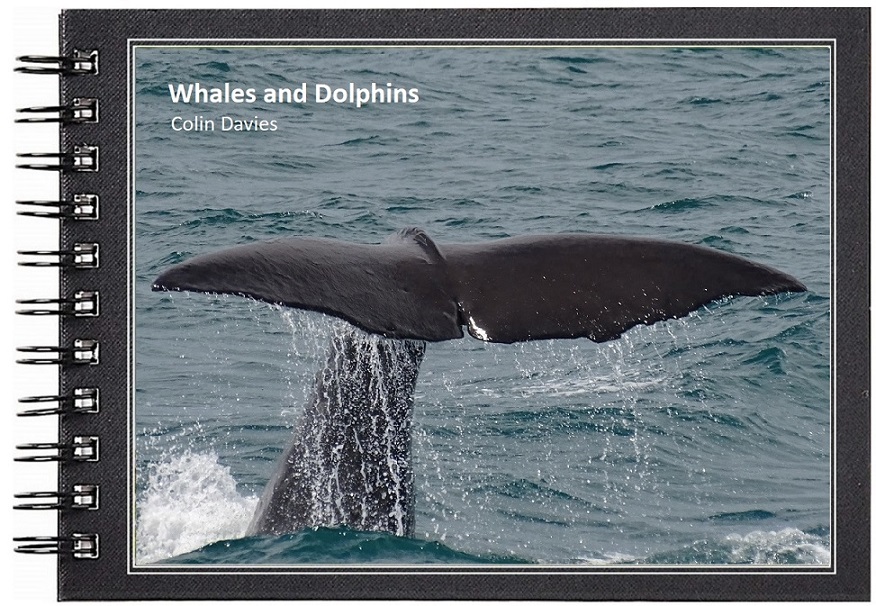
Photo: male Sperm whale diving

Whale watching in Kaikoura today and what a fabulous day, we saw a single sperm whale and many dusky dolphins, both of which were new for me. Also today two new species of albatross and a few other decent sea birds.

Sunday, 20 October 2019

The dugongs and Indo-Pacific bottlenose dolphins of Monkey Mia

Photo: Mother and calf dugong.

The Shark Bay World Heritage Area covers around 2.2 million hectares and is about a 10 hour drive north of Perth, best accessed from Monkey Mia. There are many reasons for its listing as a World Heritage Area, one of which are the wonderful stromatolites at Hamelin Pool which deserve a post all of their own. Another reason is that it is home to a large population of dugongs which feed on the seagrass in the bay just offshore. Dugongs are neither whales or dolphins, they are in fact related to manatees, and are often called seacows, with Shark Bay having around 10% of the world population, about 10,000 animals. The holes you can see are not blow holes because the species does not have blow holes. They are in fact the dugongs nostrils and as you might expect, the eyes are behind the nostrils as you can see more clearly in the photo below.

Today we managed to see about 15 of these wonderful creatures, as well as about 10 Indo-Pacific bottlenose dolphins and a few awesome loggerhead turtles.

Sunday, 13 October 2019

Humpbacks at Exmouth, Western Australia


It's getting a little late in the season now for whale watching from Exmouth, but we still managed to see a few female humpbacks with calves which was nice. The animal above is a calf.


Mother and calf humpback whale.


Exmouth is an amazing place, not a particularly beautiful town, but it really feels like you are in the outback or in a frontier town. Emus walking around the streets, warning signs about dingos and some familiar species not looking quite so familiar as I expected.

Take the bird above for example. It's a crested pigeon, quite common across all of Australia including in the major cities of the south and east.This however is of the western race whitlocki which seems to me to be much brighter than others I have seen.

Tuesday, 8 October 2019

Blue Whale, Humpback Whale and Southern Right Whale, Dunsborough, Western Australia


We'd only been out about 10 minutes, less than half a mile offshore I would say when one of the crew standing next to me said "I'm sure that's a blue over there".  The skipper immediately turned the boat and headed over. This is the same guy who just a few minutes earlier had told me that they had seen a blue whale last week but it had only surfaced once never to be seen again, so I was a little nervous to say the least. The chance of seeing a blue whale, the largest animal ever to exist was the dream of a lifetime, but would it reappear or would this prove to be a shatteringly close but ultimately failed dream? How many more opportunities would I get?

Fortunately the animal did reappear and broke the surface several times giving us some great views, though not quite the vaudeville performance which is usually put on by humpbacks! Perhaps not quite up there with the Orca I saw off mainland Caithness last year which were the highlight (so far) of my career as an amateur naturalist, but not far short and still a fantastic experience.

Sunday, 18 November 2018

Albatrosses and Whales, Port Fairy pelagic, South East Australia

Snowy albatross

"Wanderer at 6 o'clock!", the cry went up and sent shivers down my spine. This was the moment I had been dreaming of for years, the appearance of a great albatross during a southern ocean pelagic. We'd been at sea for six hours, we were 35 miles offshore from Port Fairy, Victoria, over the edge of the continental shelf and the sea bed was nearly a kilometer below us. We'd seen many albatrosses already, but they were all of the smaller type, in this region often referred to as molyhawks. Four species in fact, shy, black-browed, Indian yellow-nosed and Campbell albatross, all with wingspans of 2.5m or less.

The new arrival was considerably bigger, a wandering albatross with a wingspan of up to 3.5m, the longest of any living bird. This awesome and majestic bird glided past the boat without a single flap of the wings, dwarfing the nearby molyhawks and taking my breath away. Over the next hour or so the bird stayed with us and was joined by an immature bird, as well as two other species of great albatross.

Sunday, 5 August 2018

Orca! Duncansby Head

Photo: Orca, bull #72 of the 27s pod.

I knew that orca had been sighted in the Caithness area in the days before I left home for a week in the far north of Scotland, thanks to a series of messages being posted on the "Caithness and North Sutherland Cetacean sightings" Facebook group, but catching up with them was always going to be a challenge. They seemed pretty wide ranging, often going north into the Orkney archipelago as well as all around the coast to the west and south. I resigned myself to the fact that they were just the stuff of dreams, something to look out for while I was in the area, but not a serious proposition.

The town of Lossiemouth is on the most northerly point of the south coast of the Moray Firth near Inverness, and it can be hard to believe that from here there is still enough land left in the UK for you to be able to drive north for another four hours, but that's exactly what I was faced with today as I left my hotel and started my journey to Melvich on the extreme north coast of Scotland.

When I set off I had no intention of looking for orca, they were something I might look for on another day, today was just a day of travel. However, soon I received news that a family party of seven orca had been seen passing Duncansby Head near John O'Groats and later they were seen feeding to the north of Freswick Bay. I was tempted but would they hang around? It seemed the perfect day for viewing, with good light and relatively flat calm seas with just a light breeze, so I decided that it was just too good an opportunity to miss and I set my SatNav for John O'Groats.

Photo: Orca, bull #34 of the 27s pod.

Duncansby Head lies a mile or two to the north east of John O'Groats, a small, scattered village famous for being the most northerly inhabited point of mainland Britain. The scenery here is dominated by the islands of Orkney, less than 10 miles away to the north, whilst to the south lie the oddly shaped Stacks of Duncansby with their mighty cliffs and seabird colonies. It's a very wild and remote place, where the Pentland Firth meets the North Sea and though never matching the west coast for seascapes and rugged beauty, it has a remoteness almost unique in mainland Britain. None of that matters to me now though, Duncansby Head will be forever associated with surely the most dramatic and exciting wildlife experience of my life.

However all of that still seemed a long way off and the orca were still a dream, because at the moment that I set the SatNav for John O'Groats I was still a good two hour drive from where I needed to be. Would the orca stick around for that long?
Saturday, 30 June 2018

Humpbacks at Whalers Way, Southern Eyre Peninsular, Australia


Rock parrots, tawny-crowned honeyeaters, emus, western grey kangaroos, Humpback whales, southern right whales, New Zealand fur seals and stunning views over the Great Australian Bight, this really is the wildest and most incredible place


If the world was flat then this is where the edge would be, this is the eastern end of the Great Australian Bight. If you set out in a boat and headed in the direction that we are looking here, west over the sea, it would be 1300 miles before you next hit land and when you did, it would be the same country just the other side of the bay. The scale of the place is phenomenal. In truth, in a flat world it seems almost like this is the opposite edge of the world to the Outer Hebrides, which have a similar feel and a similar sense of vastness. And the wildlife here just adds to that sense of being on the opposite edge, a group of kangaroos hop away as you approach, an emu appears on the ridge ahead, rock parrots fly up from your feet and a group of whales are blowing out at sea.


Which monster lives in this cave?

Friday, 22 June 2018

Common bottlenose dolphins and a first look at Port Lincoln, South Australia


Mother and calf common bottlenose dolphins close inshore at Port Lincoln. There's another species of bottlenose dolphin in Australia called Indo-Pacific bottlenose dolphin which is also known as inshore dolphin, but this is not that species because it doesn't occur in South Australia,


Pacific Gull, Port Lincoln

I must admit to being a little unsure as to what to expect from Port Lincoln when I was travelling here. I assumed that moving from the tropics to South Australia in the middle of the Australian winter might be a bit of a shock to the system. I also assumed that the town might be a little more industrialised and less touristy than some of the other places that I had called home over the past few weeks. Finally, it was likely to offer a quite different suite of birds to those I was used to further north.

As usual I was up at dawn. Josh had to get to work early so I had breakfast with him and then prepared to head out. Before I did so however, I had a quick look from our apartment and immediately added two birds to my Australia list which were just about as far apart on the spectrum of Australian birds as you could imagine. The first was a blackbird, an introduced species here, brought by the early Europeans to make them feel more at home.

The second was a major target species of the holiday, an adult Pacific gull landed on the roof opposite. At this point I should mention, we're staying on the marina and the roof opposite is only about 50m away but is on the other side of the main channel out of the marina.

Coming from the UK where I can often expect to record 10 species of gull or more at the Pennington Flash Gull roost, it seems a little odd to me that the there are only three regularly occurring species of gull in Australia, and one of those only started breeding in the mid 20th century. I mean I know that Australia is a remote continent but you'd think that gulls would be about the best placed of all birds to reach it and colonise. Other seemingly less likely species are here, osprey, cattle egret etc. Even the sea bird mecca that is New Zealand fares little better when it comes to gulls.

Thursday, 7 June 2018

Australian humpback dolphins, Fraser Island, Queensland, Australia


Fraser Island is a magical place with so much to see, but for me these beautiful Australian humpback dolphins stole the show, what absolute beauties! They were swimming just offshore near the ferry terminal at River Heads near Hervey Bay and are apparently virtually resident.


Someone once said that real birds eat fish, and that's something I can really relate to. Fish eating birds are generally something special. However in Australia I'd have too beg to differ and say that real birds eat crabs!

I was walking along the beach on Fraser Island today when this stonking beach thick-knee walked out from the vegetation calling. This is a species which in my experience is quite timid and will not allow close approach, however this bird walked towards me and was obviously quite agitated.  I assume that it must have had a nest or chicks nearby, but I didn't dwell too long in the area. Like all beach birds, beach thick-knee is under threat due to its preference for nice sandy beaches which unfortunately also attract people.

Friday, 20 May 2016

Spotted Dolphins, Madiera

Today we went on the Whale and dolphin watching trip run by Madeira sea birds. It was almost bird less, but the spotted dolphins were fun and we did see a handful of Cory's shearwater. 


Wednesday, 14 October 2015

Humpback Whale migration, Sydney Australia

Just an awesome experience this afternoon, we set out from Circular Quay at 13.15 in search of migrating whales and saw at least five Humpbacks. At first they just broke the surface to reveal their dorsal fins, but soon we saw them tail slapping until eventually they breached and jumped clear out of the water on two occasions.  Also on the way back we saw three Indo-Pacific bottlenose dolphins.


Now that's the way to see a humpback! Breathtaking!


A pectoral fin slap.

Thursday, 17 September 2015

Risso's dolphins Strumble Head, Pembrokeshire

It was a beautiful, calm day at Strumble Head today with flat turquoise seas, perfect for cetacean watching. I'd gone to the headland specifically to look for Risso's dolphins which are regularly seen here, with up to four reported over the past day or two. Almost immediately I saw several harbour porpoise close inshore, and looking a little further out I spotted a couple of common dolphins jumping out of the water. Finally, after a search of around a couple of hours, I spotted the tall falcate dorsal fin of a Risso's dolphin. Then I saw that there were three other animals close by. They feed on squid deep under water at night, and are apparently usually seen moving slowly on the surface during the day, but these were anything but slow today. They crashed through the water at pace, often changing direction suddenly as if chasing something, almost killer whale like in their behaviour and with their tall fins. They can't have been hunting, so perhaps they were just playing. Then one jumped completely out of the water and I could see it's white head and face, and I could see the diagnostic scratch marks along its body. I watched them for several minutes as they jumped again, before they vanished and the sea was calm again. A tremendous experience.

On such a calm day I wasn't expecting to much sea bird activity, but I did see a fly-by grey phalarope and at least four black terns, but apart from that just a couple of Manx shearwaters and no skuas.


Friday, 15 March 2013

Harbour Porpoise, Bull Bay, Anglesey


Despite being possibly the easiest to see British cetacean, I very rarely get opportunity to photograph harbour porpoise because they don't seem to stay on the surface very long, and don't jump out of the water, so I was pleased to see two today from the coast at Bull Bay.

Wednesday, 12 May 2010

The Pride of Bilbao

We had some nice weather, on both days that we crossed the Bay of Biscay on the wonderful P&O ferry "Pride of Bilbao". Dolphin and whale watching wasn't quite as good as we had hoped for, but we did at least see 3 fin whales as well as common and striped dolphins


Saturday, 24 May 1986

White-beaked dolphins from Good Shepherd III


On May 25th 1986 myself and two mates were on board the legendary Good Shepherd III, on our way back to Sumburgh from a week on Fair Isle and looking forward to 10 days on Shetland. By lucky chance this was also the last scheduled sailing of Good Shepherd III which was about to be replaced by Good Shepherd IV. 

We met Good Shepherd IV half way back and the two boats circled around each other with the crews in celebratory mood, before we continued on our way. Almost as if they were escorting us back, 3 white-beaked dolphins rode the bow of Good Shepherd III. Still the only white-beaked dolphins I've ever seen for sure.


Good Shepherd III, pictured here at Sumburgh, had legendary status due to the rough seas on the 2.5 hour journey. It was a converted fishing boat not really designed to carry passengers. Good Shepherd IV is luxury in comparison. At the time of writing (24/07/2025) GS IV is still operating, though I have heard that it is soon to be replaced by Good Shepherd V.


White-beaked dolphin riding the bow of Good shepherd III. This was my first experience of this behaviour and probably the thing that got me hooked on cetaceans. 


After Fair Isle we spent two weeks on Shetland where one of the highlights was the long staying black-browed albatross in the gannet colony at Herma Ness on Unst.


Me and Jon at Herma Ness, with Muckle Flugga lighthouse behind.

Popular Posts